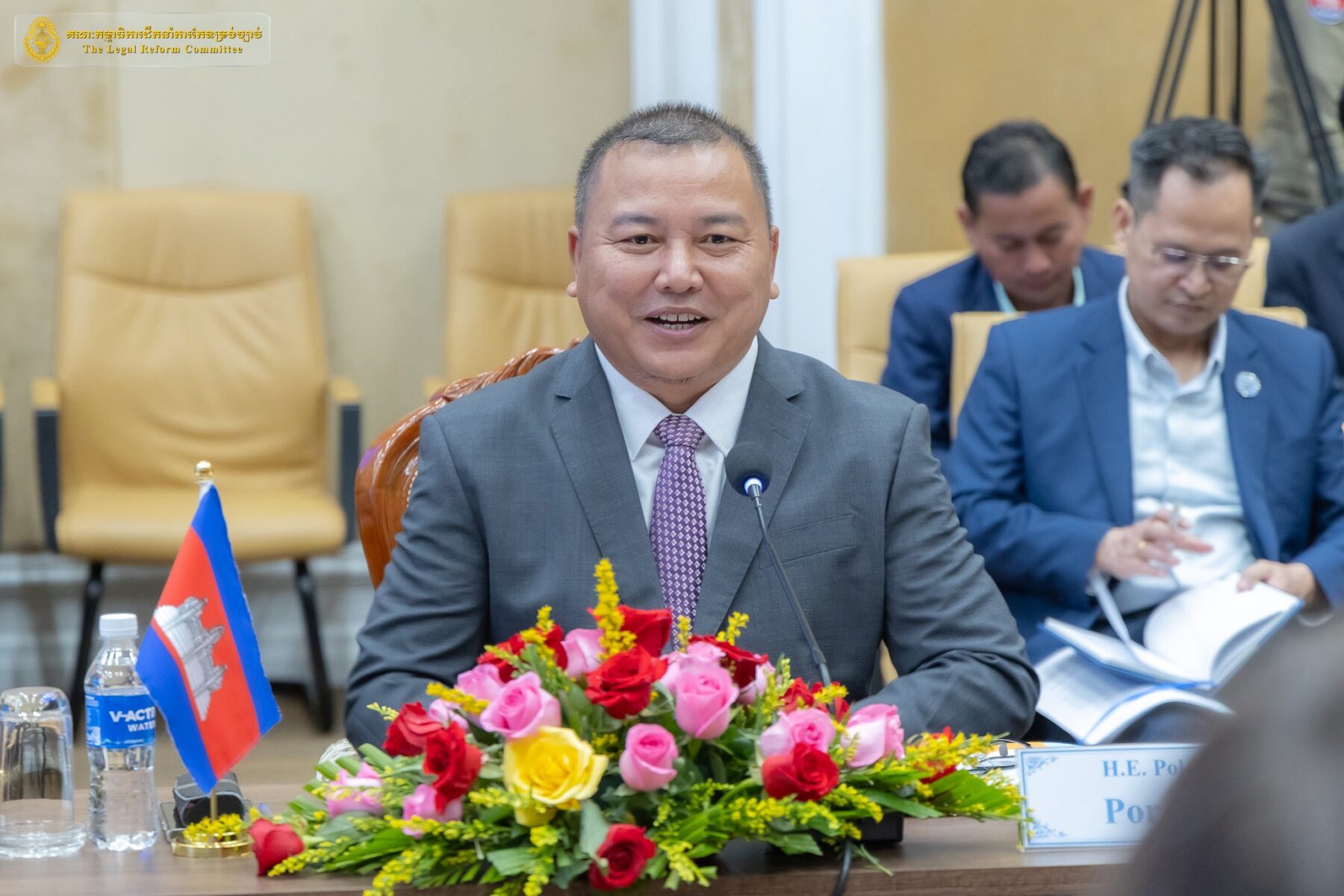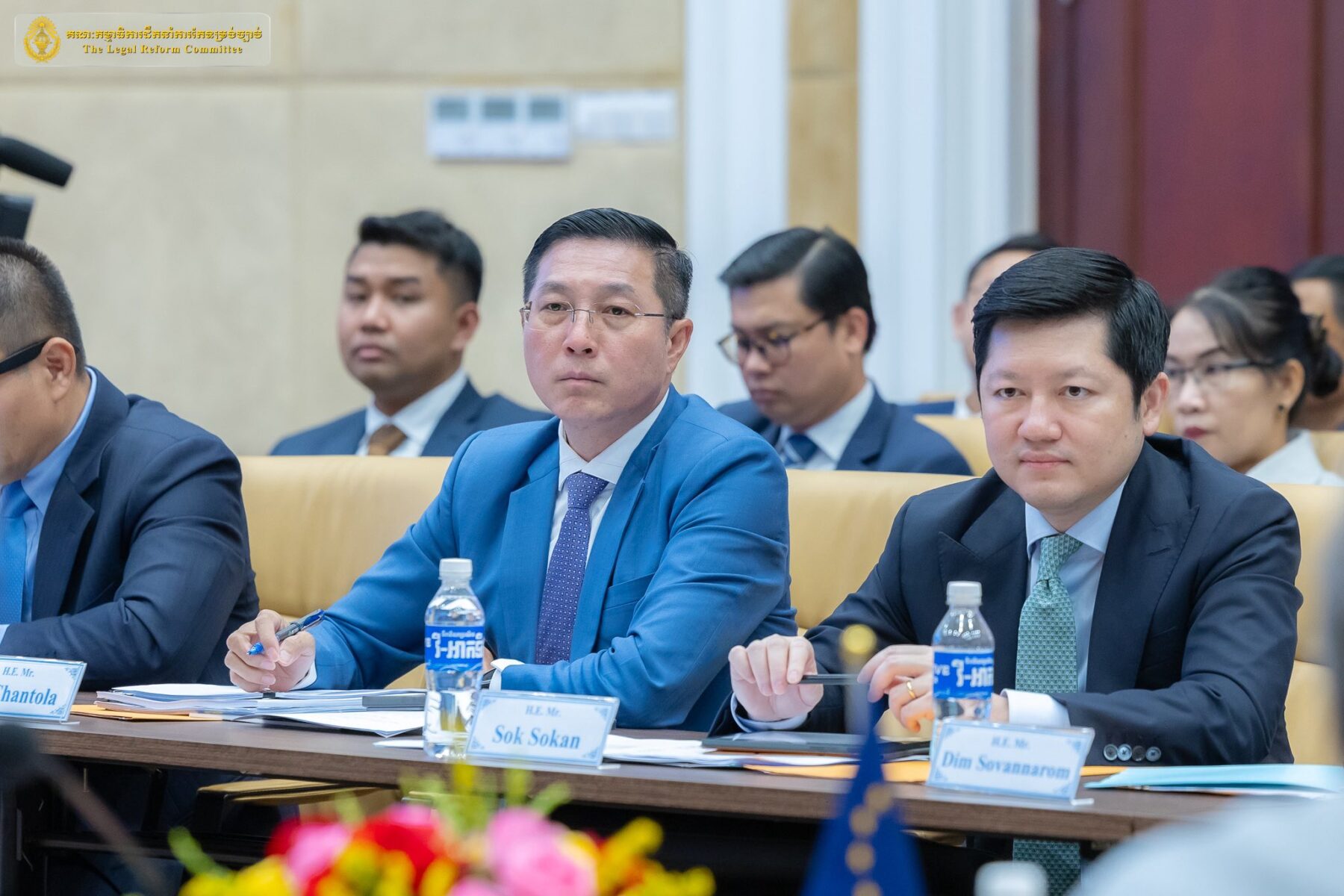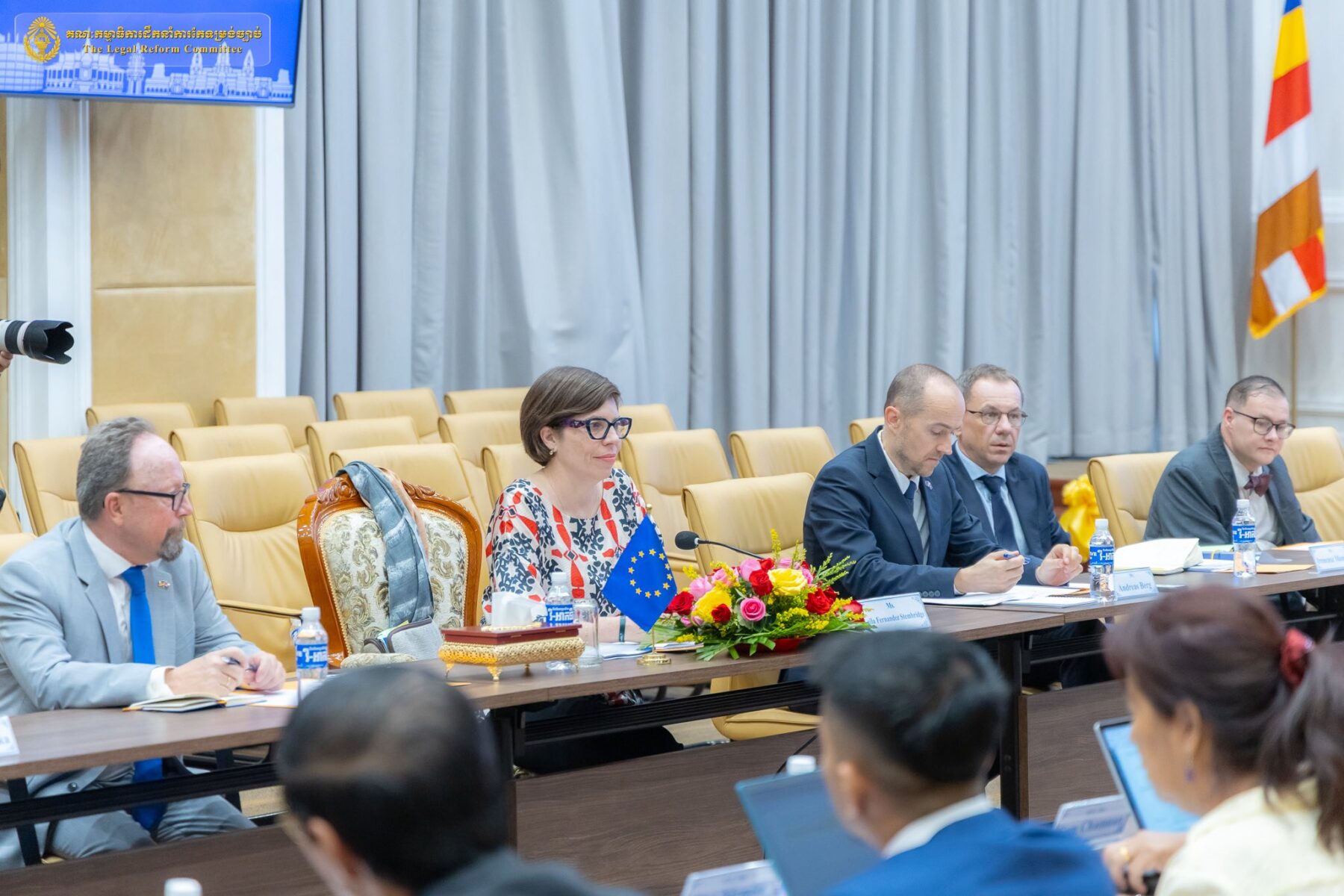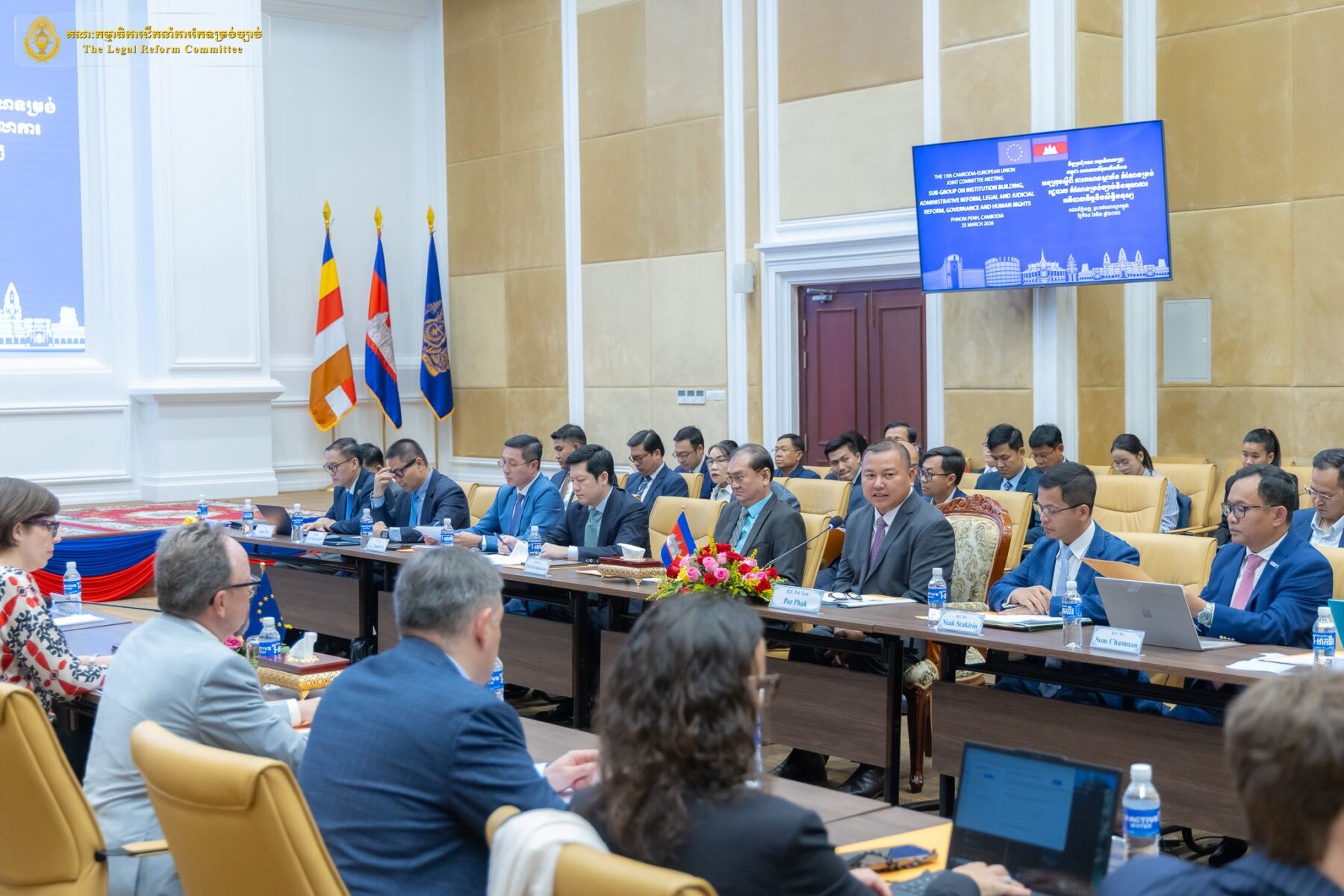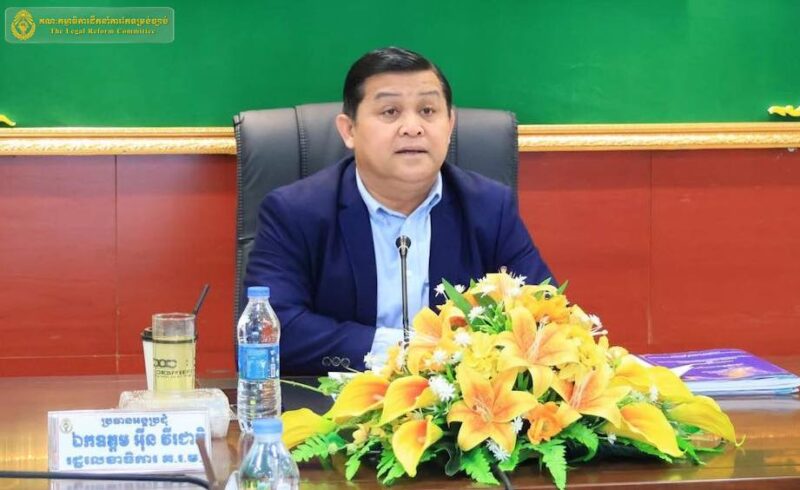


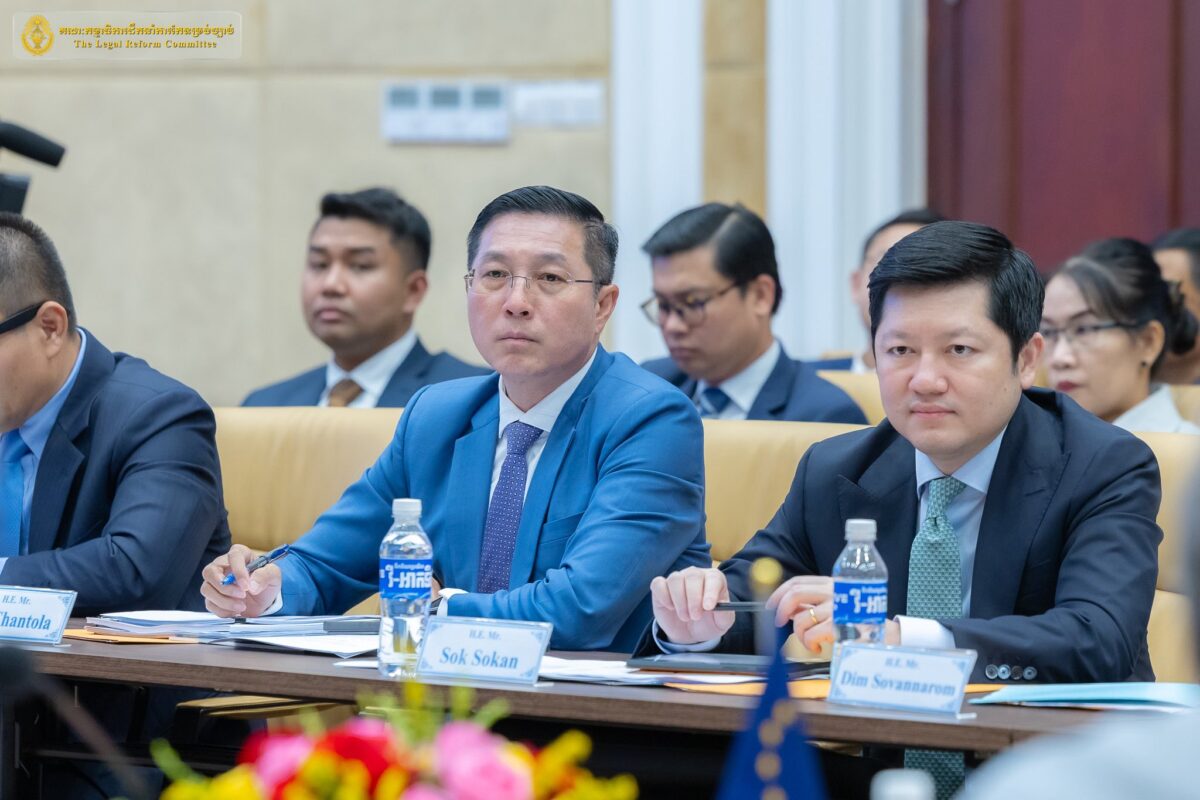
H.E. LY Chantola, Deputy Chairman and Secretary General of the Legal Reform Committee (LRC), attended the 13th Cambodia–European Union Joint Committee Meeting on institution building, administrative reform, legal and judicial reform, governance, and human rights.
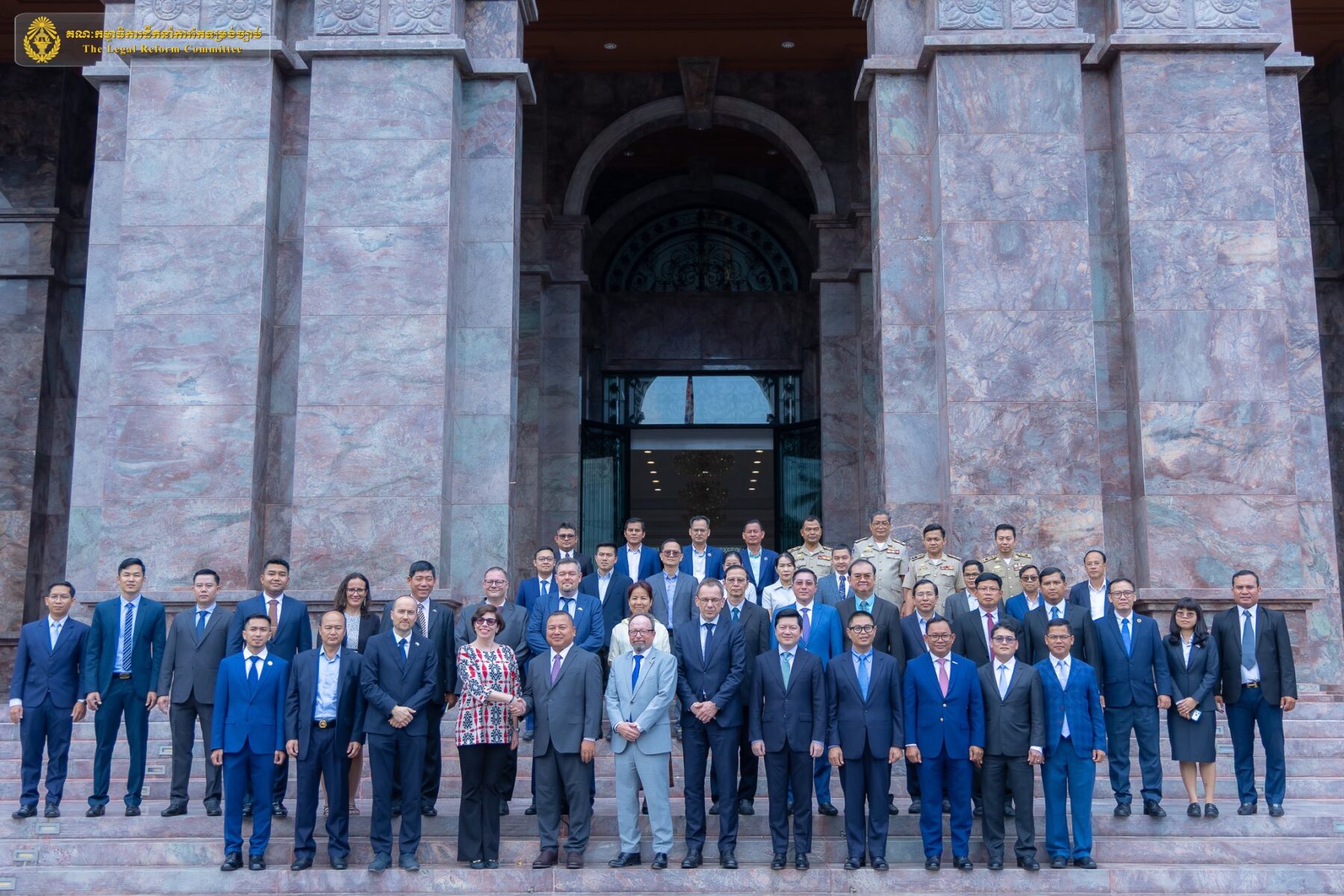
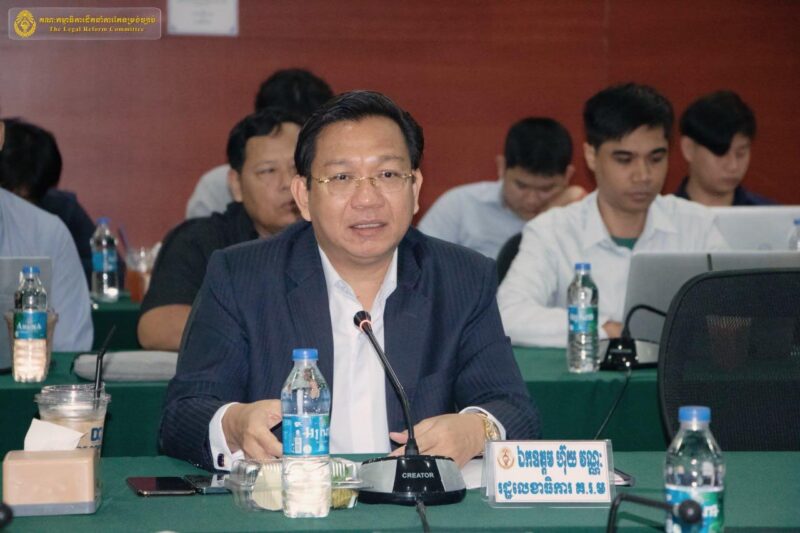
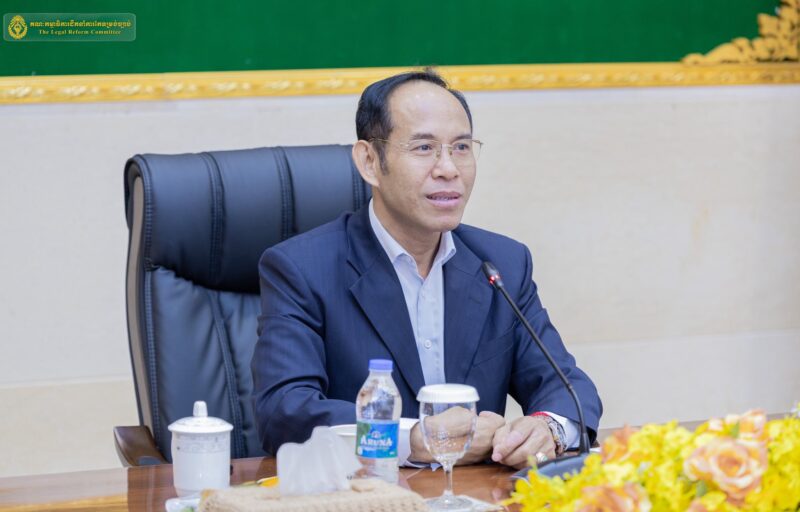
On the afternoon of Wednesday, March 25, 2026, at the Ministry of Interior, H.E. LY Chantola, Secretary of State of the Office of the Council of Ministers, Deputy Chairman and Secretary General of the Legal Reform Committee (LRC), accompanied by Mr. Morn Sophorn, Mr. Meak Seyha, and Mr. Chandara Roman, legal consultants of the General Secretariat of the LRC, attended the 13th Cambodia–European Union Joint Committee Meeting on institution building, administrative reform, legal and judicial reform, governance, and human rights.
This important meeting was co-chaired by H.E. General POR Phak, Secretary of State of the Ministry of Interior, and Ms. Leila Fernandez Stembridge, Head of the Southeast Asia Division of the European External Action Service.
On this occasion, H.E. LY Chantola delivered remarks on behalf of the Legal Reform Committee, highlighting significant progress in line with the Pentagonal Strategy – Phase I of the Royal Government of Cambodia under the high leadership of Samdech Moha Borvor Thipadei Hun Manet, Prime Minister of the Kingdom of Cambodia, which places high priority on five key reforms: public administration reform, decentralization and deconcentration reform, public financial management reform, judicial reform, and legal reform.
Under the direct leadership of H.E. Vongsey Vissoth, Permanent Deputy Prime Minister, Minister in charge of the Office of the Council of Ministers, and Chairman of the LRC, the Committee has played a vital role as a key advisory body to the Royal Government in leading, supporting, and coordinating legal reform programs nationwide.
As a key achievement in 2025, the LRC officially launched the “Strategic Framework for the Royal Government’s Legal Reform Program,” a 20-year vision (2025–2045) aimed at building a coherent, effective, and modern legal system in Cambodia. This strategy focuses on four priority pillars:
(1) enhancing legal dissemination and accessibility,
(2) strengthening the legal drafting framework,
(3) improving monitoring and evaluation of law-making and implementation, and
(4) establishing mechanisms for resolving legal normative conflicts.
In addition, the LRC has achieved several foundational milestones, including compiling constitutional amendments and laws from the 1st to the 7th legislatures, drafting a concept paper on legal interpretation, conducting study visits to France, Singapore, and Malaysia, and cooperating with development partners such as the United Kingdom and the Asian Development Bank (ADB) to establish a legal data center.
This joint working group meeting with the European Union served as a valuable platform to discuss a wide range of important agenda items, including political freedoms and democratic space, labor rights, land issues, gender equality, combating human trafficking, and good governance.
Through this cooperation, the LRC reaffirmed its strong commitment to continuing dialogue and receiving technical support from the European Union to promote the rule of law, legal clarity, and public access to legal information through its official website (www.lrc.gov.kh) and social media platforms contributing to sustainable development and Cambodia’s goal of becoming a high-income country by 2050.