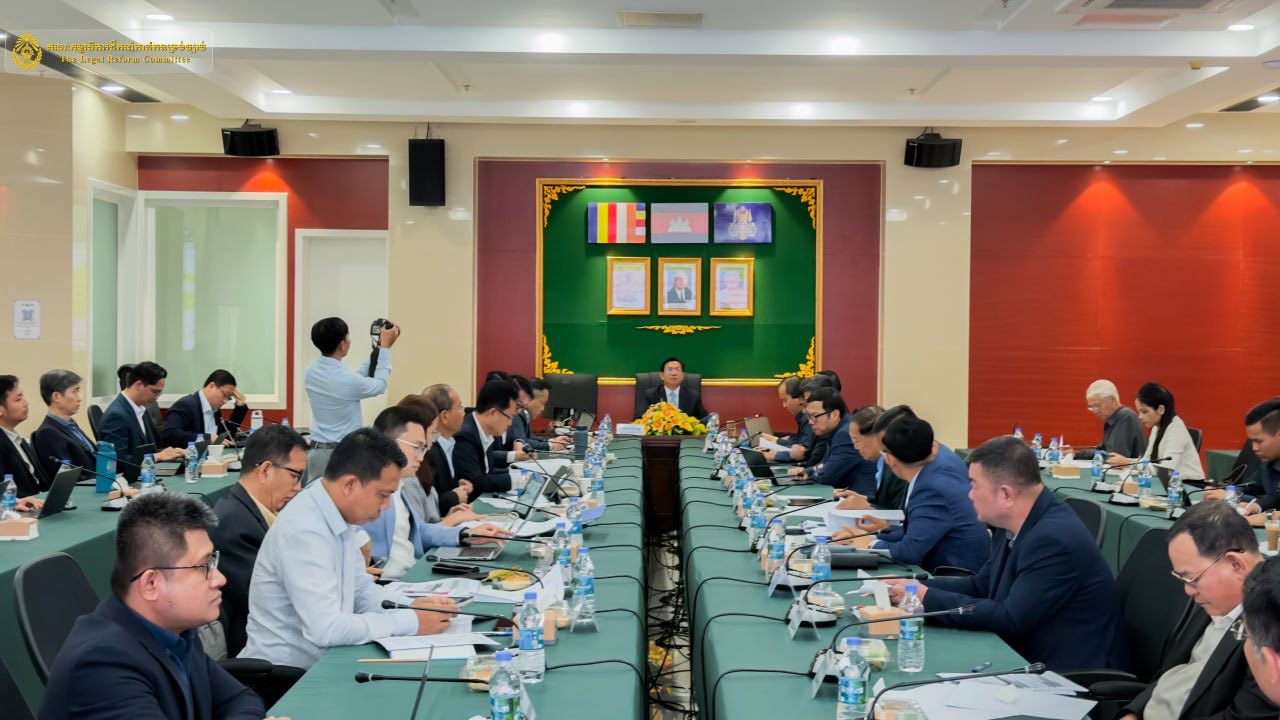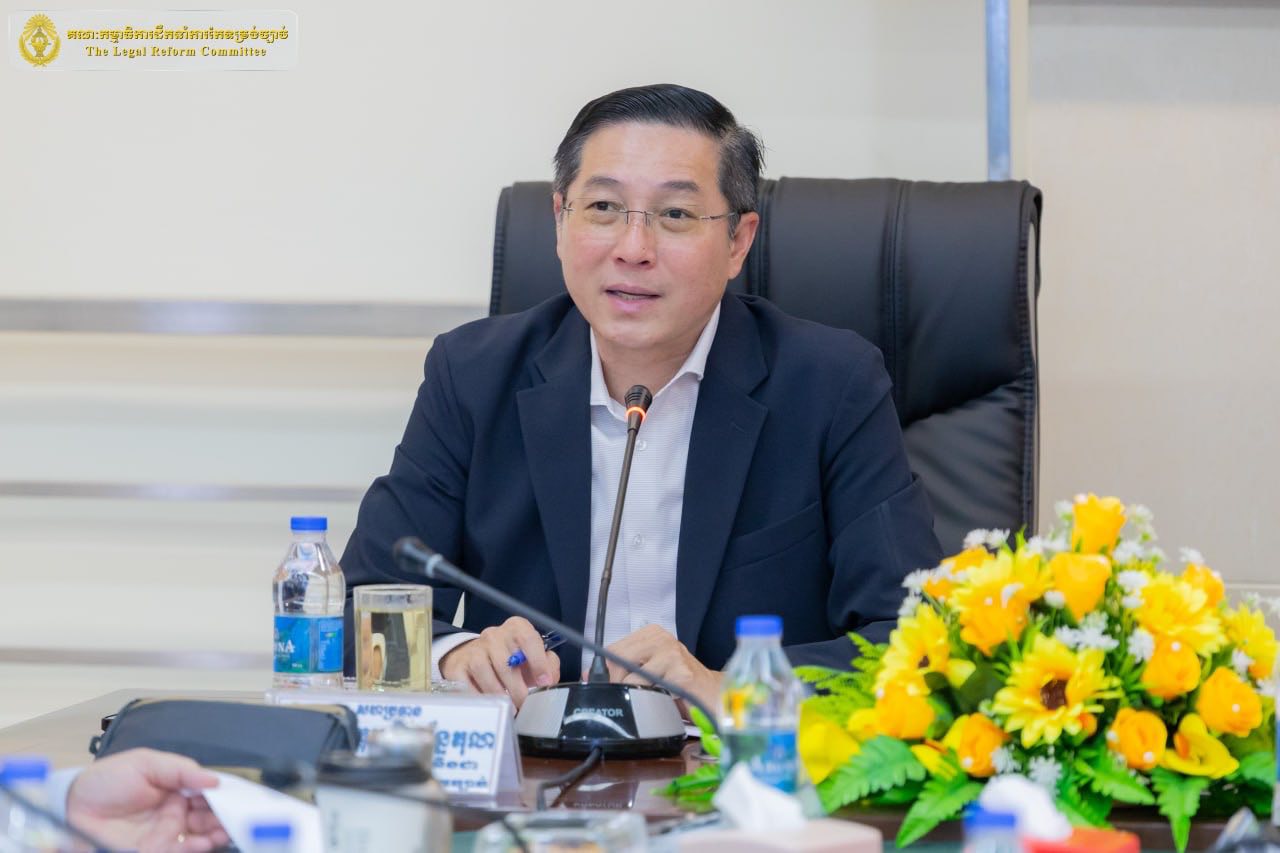
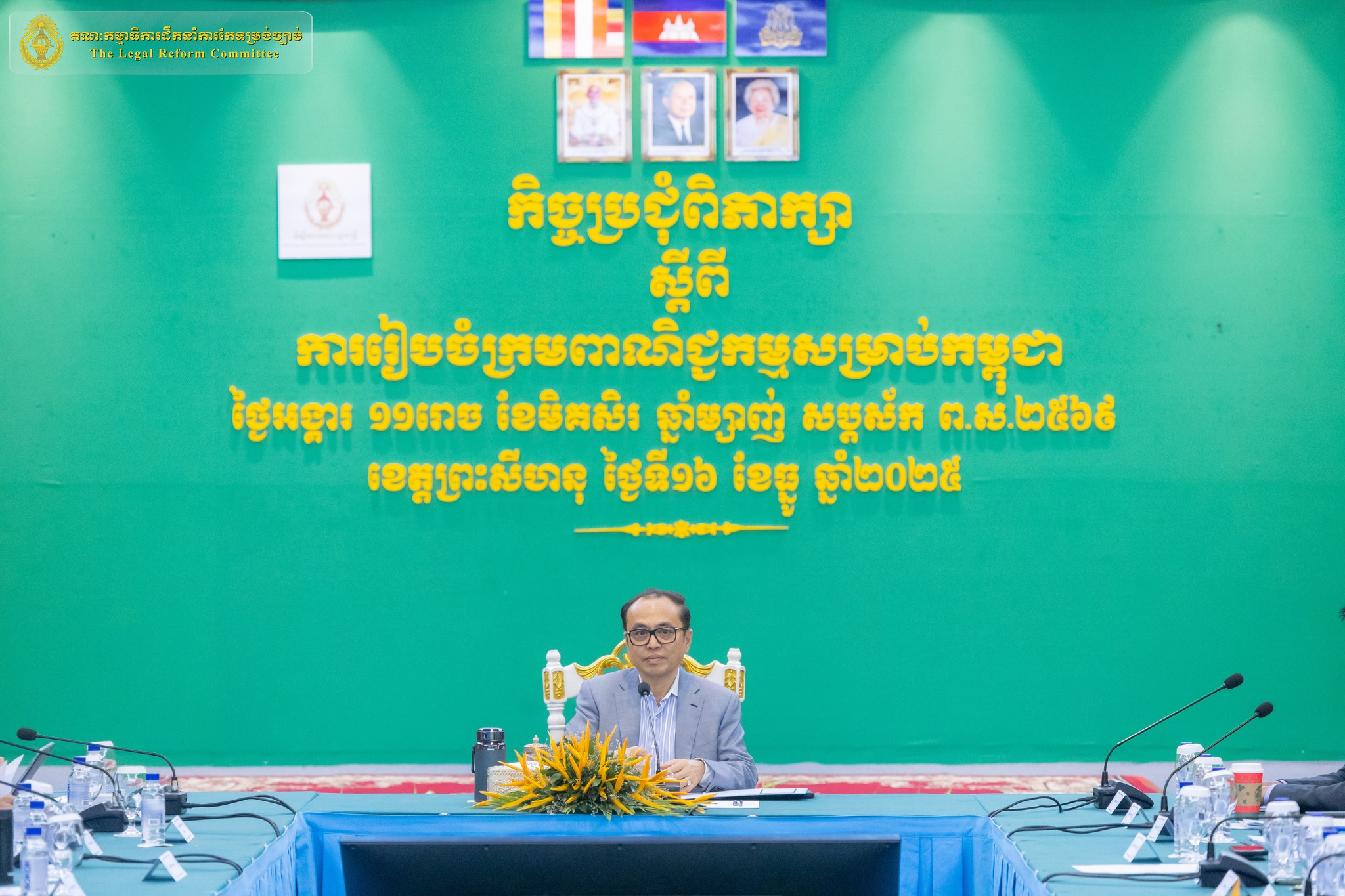
His Excellency Deputy Prime Minister Vongsey Vissoth leads a meeting to discuss the preparation of a trade code for Cambodia.
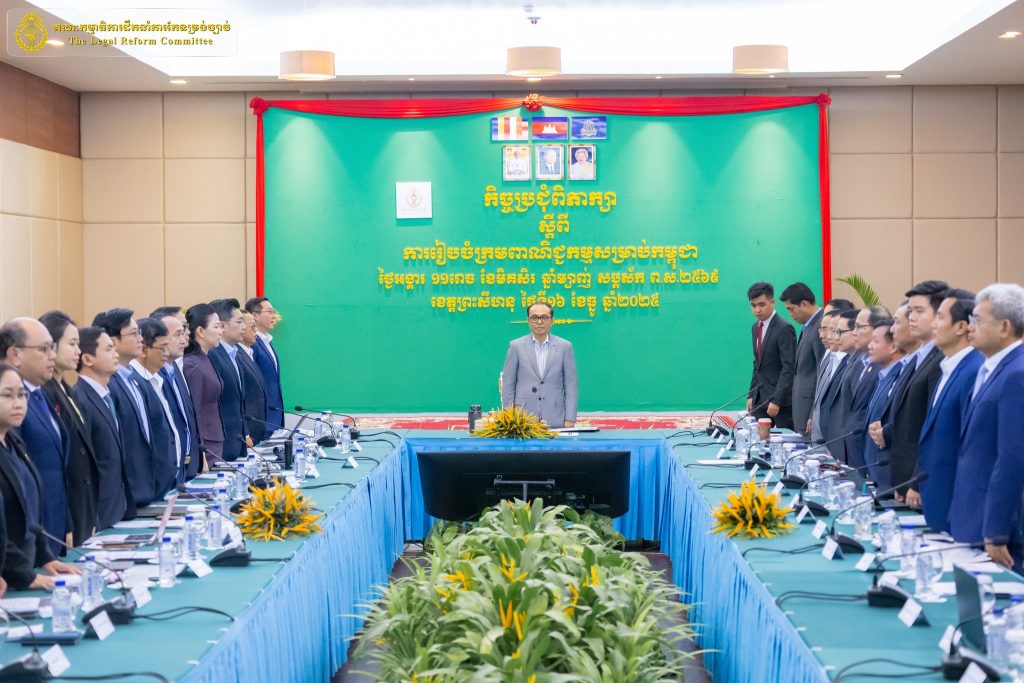
On the morning of December 16, 2025, His Excellency Vongsey Vissoth, Deputy Prime Minister, Minister in Charge of the Council of Ministers and Chairman of the Steering Committee for Legal Reform, chaired a discussion meeting on the preparation of a Commercial Code for Cambodia. The discussion meeting was organized by the Steering Committee for Legal Reform, with the participation of representatives from the Ministry of Commerce, the Ministry of Justice, the Ministry of Economy and Finance, the Council for the Development of Cambodia, and the Council of Lawyers, as well as several relevant ministries, institutions, organizations, and actors.
His Excellency Vongsey Vissoth said that the start of discussions on the preparation of a Commercial Code for Cambodia is a new step within the framework of the Royal Government’s legal reform program to jointly rethink the commercial law framework to become a commercial code as part of the legal system to create a common environment to facilitate and solve problems in trade, business, and attracting investment, especially by streamlining procedures, reducing costs and time, and creating a fair competitive environment, employment, increasing income and added value, and promoting economic growth. His Excellency Vongsey Vissoth said that when talking about the economy, we must talk about the rule of law because the economy relies heavily on law, and law is also related to policy. Therefore, there can be no other policy and no other law, because it can hinder growth and increase unnecessary burdens on businesses, businesses and the people.
His Excellency Deputy Prime Minister Vongsi Vissoth also said that the approach to preparing this Commercial Code must be considered as a package to address economic, social, development and human problems, including studying international theories and best practices and evaluating implementation and inputs from direct beneficiaries, especially reviewing and amending legal regulations that are outdated, unenforceable, fragmented, conflicting, translation problems and excess or deficiency of laws in our legal system, as well as preparing additional necessary legal rules.
The meeting held a lively discussion on the legal framework, scope, content and design, as well as the codification of the Commercial Code. The meeting also highlighted the need for the preparation of the Cambodian Commercial Code.
It is worth noting that the preparation of this Commercial Code aims to enhance the effectiveness of the implementation of legal standards in the commercial sector, maintain Cambodia’s values in globalization, with a specific structure according to a clear legal logic, to reduce complexity and eliminate negative impacts on the commercial sector, as well as ensure standards, timeliness, quality, efficiency, transparency, accountability, and trust from traders, investors, and businesspeople, especially the ultimate beneficiaries, the Cambodian people and the entire Cambodian nation. At the same time, the preparation of this Commercial Code will also provide benefits such as:

(1). Unify the laws and legal documents in the commercial sector, both existing laws and legal documents and new rules that require additional provisions.
(2). Make it clear, orderly, and legal security in the drafting, consultation, approval, implementation, interpretation, and dispute resolution in the commercial sector.
(3). Make it simple, easy to find, easy to understand, and easy to apply, but in accordance with international legal logic.
(4). Strengthen and expand the legal framework in the commercial sector and create a more conducive business environment for investment.
(5). Promote businesses to be more competitive and reduce trade barriers to achieve higher, more equitable, and sustainable growth to improve the livelihoods and jobs of citizens.
(6). Build human resources in the legal sector, including judges, lawyers, legal experts, and law students, related to laws and legal documents in the commercial sector.